
A client comes to us wanting "an app." Nine times out of ten, what they actually need is a web application, and building a native mobile app instead would have cost them three times as much and taken twice as long. The reverse happens too: a business builds a website when what their customers actually need is something that works offline, sends push notifications, and lives on a home screen icon.
This mix-up is one of the most expensive mistakes a business can make before a single line of code is written. Get it wrong and you either overspend on a native app nobody downloads, or you underbuild a web tool that cannot do what your customers actually need it to do. Both mistakes are avoidable, and both come from skipping the same short conversation before the brief gets written.
The real question isn't "app or website", it's "how will this be used"
Business owners usually frame this as a binary choice: app or website. That framing is the problem. The real question is much more specific: where does this software need to run, how often will people use it, and what does it need to access on the device it runs on?
Once you answer those three questions honestly, the build type usually chooses itself. Most businesses skip this step entirely and go straight to briefing a developer with "build me an app", which is exactly how so many South African businesses end up with an expensive native app sitting unused in the App Store, while their actual customers are still messaging them on WhatsApp.
What a web application actually is (and is not)
A web application runs in a browser. Your customer opens Safari, Chrome, or whatever is on their phone, types in a URL or taps a link, and the software loads. No download, no App Store approval, no update prompts. You build it once with a custom web application and it works on every device with a browser, which today is effectively every device.
Web apps are not "lesser" than native apps. A modern web application can handle logins, dashboards, payments, file uploads, real time data, and complex workflows just as well as a native app can. The client portal a business uses to track invoices, or the internal tool a warehouse team uses to manage stock, is almost always a better fit as a web app than a native one.
What a native mobile app actually is (and is not)
A native mobile app is downloaded from the App Store or Google Play and installed on the device itself. It can access hardware a browser cannot reach as reliably: the camera for barcode scanning, GPS for live location tracking, push notifications that work even when the app is closed, and offline functionality that keeps working with zero signal.
That access comes at a real cost. Native apps generally require two separate codebases (iOS and Android), ongoing App Store compliance, mandatory updates when Apple or Google change their rules, and a download step that a huge percentage of potential users simply will not take. Getting someone to visit a link takes one tap. Getting someone to download, install, and open an app takes real intent, and most casual visitors will not clear that bar.
There is a hybrid option worth knowing about too: frameworks that let a team write one codebase and ship it to both iOS and Android with native performance. It narrows the cost gap between native and web, but it does not close it entirely, and it still requires App Store approval and two separate release processes. It is worth raising with your developer if native genuinely is the right call, but it is not a shortcut that changes the underlying decision.
The three factors that actually decide this
Ignore instinct and price for a moment. These are the three factors that should genuinely decide whether you need a mobile app, a web application, or something in between. Weigh all three together. A single factor pointing towards native is rarely enough on its own.
1. How your customers will actually use it
Is this a tool people open once a week to check a dashboard, or something they need open constantly throughout their working day? Frequent, habitual use favours a native app because a home screen icon and push notifications keep the tool front of mind. Occasional or one time use favours a web app, because nobody wants to download something they will open twice.
2. What the device needs to access
Does the software genuinely need the camera, GPS, Bluetooth, or offline storage to function? A delivery driver app that needs to scan barcodes and work in a basement parking garage with no signal has a real case for native. A booking system, a quote calculator, or a client portal almost never does.
3. Your budget and your capacity to maintain it
A web application is built once and maintained once. A native app usually means building and maintaining two separate versions, plus navigating App Store and Play Store review processes every time you ship an update. If your business cannot commit to that ongoing maintenance load, a web app, or the middle option below, is almost always the more sustainable choice.
The middle ground most businesses never hear about
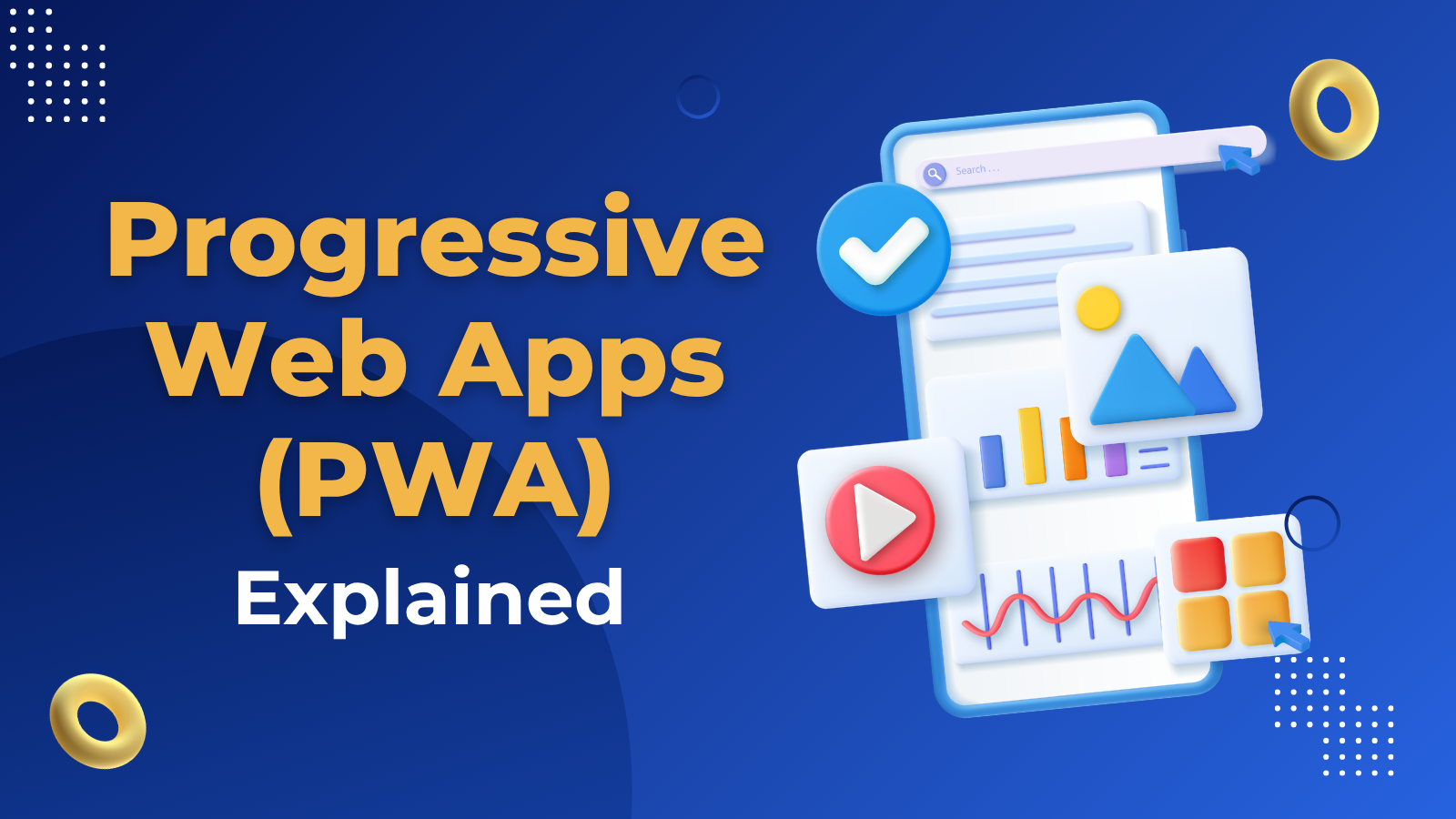
Between a full web application and a native app sits a progressive web app, a web app built to behave like a native one. It can be added to a phone's home screen, send push notifications, work offline, and load instantly, all without ever touching the App Store. We have written a full breakdown of how progressive web apps work if you want the deeper technical picture.
For a huge number of South African businesses, a progressive web app is the honest answer. You get the home screen presence and repeat engagement of a native app, without the double codebase, the App Store approval delays, or the two separate maintenance bills. It is not the right fit for every use case, hardware heavy tools like barcode scanners or fitness trackers still lean native, but for most customer facing and internal business tools, it closes the gap that used to force an either or decision.
This matters even more given how much of South Africa's internet usage happens on mobile data rather than fixed broadband. A progressive web app loads instantly on a slow connection and does not eat storage the way a heavy native install does, which is a genuine, practical advantage for a large share of the local customer base.
What good actually looks like in practice
A few real patterns we see repeatedly when businesses get this decision right, and one thread runs through every one of them: the format followed the actual use case, not the other way around.
- A logistics company chose native for their driver app because drivers needed offline GPS tracking and camera based proof of delivery in areas with patchy signal, but built their client facing tracking portal as a plain web app because clients only check it occasionally.
- A retail chain replaced their underused native loyalty app with a progressive web app. Signups rose because customers no longer had to download anything, they just tapped "add to home screen" after checkout.
- A professional services firm built their entire client portal, from document sharing to invoice tracking, as a web application. Clients log in from a laptop most of the time anyway, so a native app would have added cost with no real benefit.
- A field services business gave technicians a native app for job scheduling and photo uploads on site, because reliable offline behaviour genuinely mattered to their day to day operations, and gave their office staff a web dashboard for everything else.
None of these businesses picked one format for everything. They matched the build to the actual use case, sometimes landing on a mix of a native app for one audience and a web tool for another, inside the same project. If you recognise your own business in one of these patterns, it is worth reading our related piece on the signs your business has outgrown its current website, since the same evaluation logic applies.
The SEO and GEO layer most people forget
There is a search visibility cost to going fully native that businesses rarely factor in. A native app lives inside the App Store, invisible to Google, invisible to ChatGPT, invisible to any search engine or AI assistant someone might ask "who does X near me". A web application, by contrast, is indexable. Every page can rank on Google and, increasingly, get cited directly by AI tools like ChatGPT and Claude when someone asks a question your business can answer.
This matters more in 2026 than it did even two years ago. According to Google's own guidance on Core Web Vitals, page experience and load speed directly influence how content gets surfaced, and that entire signal set only applies to content a crawler can actually reach. Generative Engine Optimisation, being the source an AI assistant pulls from when it answers a question, works the same way: only content search engines can crawl and read is eligible to be cited at all.
A native app is a closed box to that entire discovery layer. If discoverability matters to your business, and for almost every business it does, a web presence of some kind is not optional, even if you also build a native app alongside it.
How we approach this at CodeLab One
We do not start a project by asking "app or website". We start by mapping how the software will actually be used, day to day, by real people, before recommending anything. For businesses on an ongoing Technology Partner arrangement, this decision usually evolves over time too: a business might start with a lean web application, prove the concept, and only invest in a native build once usage patterns show it is genuinely needed.
That flexibility matters. Committing to a native app too early, before you know how customers will actually engage, is one of the more expensive mistakes we help clients avoid. It is far easier to start with a strong web foundation and expand into a native mobile app once the data justifies it, than to build native first and discover the audience never needed it.
Frequently asked questions
Can a web app do everything a native app can do?
Almost everything. Modern web apps can handle logins, payments, camera access, GPS, and even offline functionality through progressive web app techniques. The remaining gap is mostly around deep hardware integration and background processing that only native apps handle reliably.
Is a progressive web app the same as a native app?
No, but it behaves close enough for most business use cases. It installs to a home screen and works offline, but it is still built and deployed as a single web codebase rather than two separate native ones.
How much more does a native app cost than a web app?
It varies by project, but building for both iOS and Android typically costs meaningfully more than a single web application, both upfront and in ongoing maintenance, because you are supporting two separate codebases and two separate app store review processes.
Do I need to be on the App Store to look credible?
Less than most business owners assume. Customers increasingly expect a fast, well built web experience more than they expect an app icon on their phone, especially for services they use occasionally rather than daily.
What if I am not sure which one my business needs?
That uncertainty is normal, and it is exactly what a proper technology brief should resolve before any code gets written. A short conversation about how your customers will actually use the product usually makes the answer obvious.
If your business is ready to build, improve, or grow its online presence, book your free website or app audit with CodeLab One today, and find out exactly where you stand.